
Case · E-commerce

Rozmarin: flowers for every reason to give them.

People often choose flowers for an occasion: a birthday, a thank-you, an apology or a farewell. We built the store for a working Wrocław florist around occasions first, with the flowers underneath for people who already know what they want. WordPress with a full cart, promotions and price filters, in Polish, English and Ukrainian.

  • E-commerce
  • Flowers
  • WordPress store
  • PL · EN · UK
  • Wrocław, Poland
rozmarin.shopRozmarin website preview
3 languages

Polish, English and Ukrainian, each with its own pages: that is how this city buys flowers. checked on the live site · Sep 2026

A store, not a gallery

Cart, wishlist, account, promotions and price filters on WordPress; bouquets bought, not just shown. checked on the live site · Sep 2026

Occasions first

The catalogue opens with why someone is buying; roses, peonies and seasonal cuts sit underneath. project record

The project

Task, approach and delivery

The task

Rozmarin is a working florist in Wrocław with a real shop and its own photography. The brief was a store that sells bouquets, not a page that shows them.

The catalogue had to work in Polish, Ukrainian and English, because that is who buys flowers in this city, and it needed a full cart with promotions and price filters, not a “call us” button.

The approach

We structured the catalogue around occasions: birthdays, weddings, engagements, sympathy. Flowers by type sit underneath for people who already know what they want.

The store runs on WordPress with a full cart, wishlist, customer accounts, promotions and price filters; the owner manages products and prices without a developer.

What we delivered

A three-language WordPress store with catalogue, cart, promotions and delivery information, run by the florist. Domain and hosting in the client’s name.

A florist’s catalogue has more than one way in

Rozmarin brings floral compositions, occasion-based browsing and online ordering into one WordPress store. Photography establishes the character of the florist, while catalogue navigation helps a buyer narrow the choice. The multilingual storefront also gives the owner a way to maintain the offer as products, promotions and available compositions change.

The opening image and the catalogue have different jobs

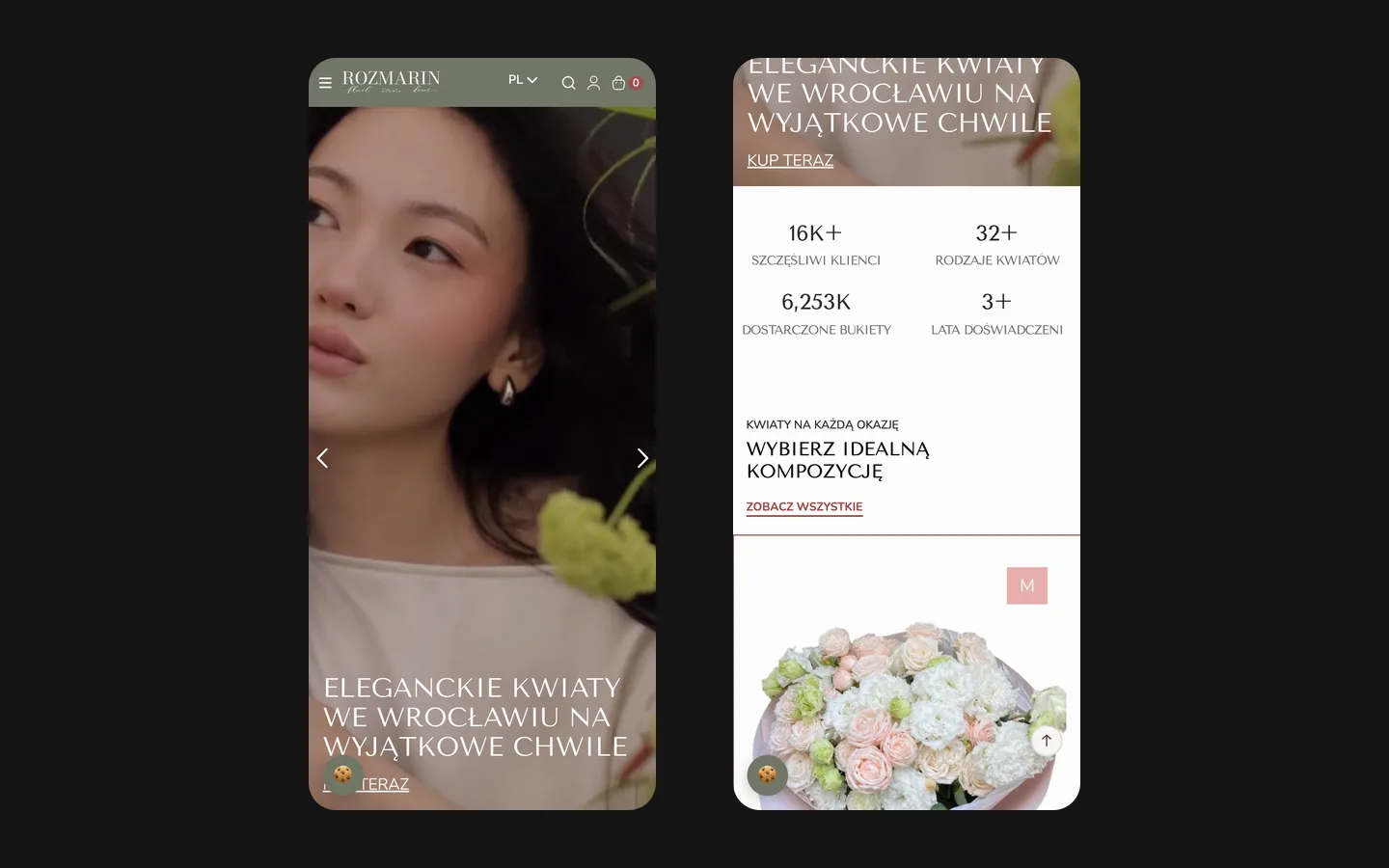
The homepage uses a large floral scene, restrained navigation and a direct shop link. It establishes the character of the florist before the product grid begins. The image can carry atmosphere because the header still gives access to the shop, search, account and cart. Those controls make the commercial purpose clear even when the opening screen is mostly photography.

A visitor arriving for inspiration can browse compositions. A person who already knows the desired flower or product can search. Someone returning to finish a purchase can open the cart. The design must leave room for all three behaviours; forcing every visitor through the same promotional story would delay the people closest to ordering.

Three questions behind the product choice

What is the occasion?
The catalogue is organised around reasons for giving flowers. This is useful for a buyer who can describe the event but does not know floral terminology. Occasion categories provide a starting point; they do not replace the product description or promise that every composition suits every recipient.
What can I spend?
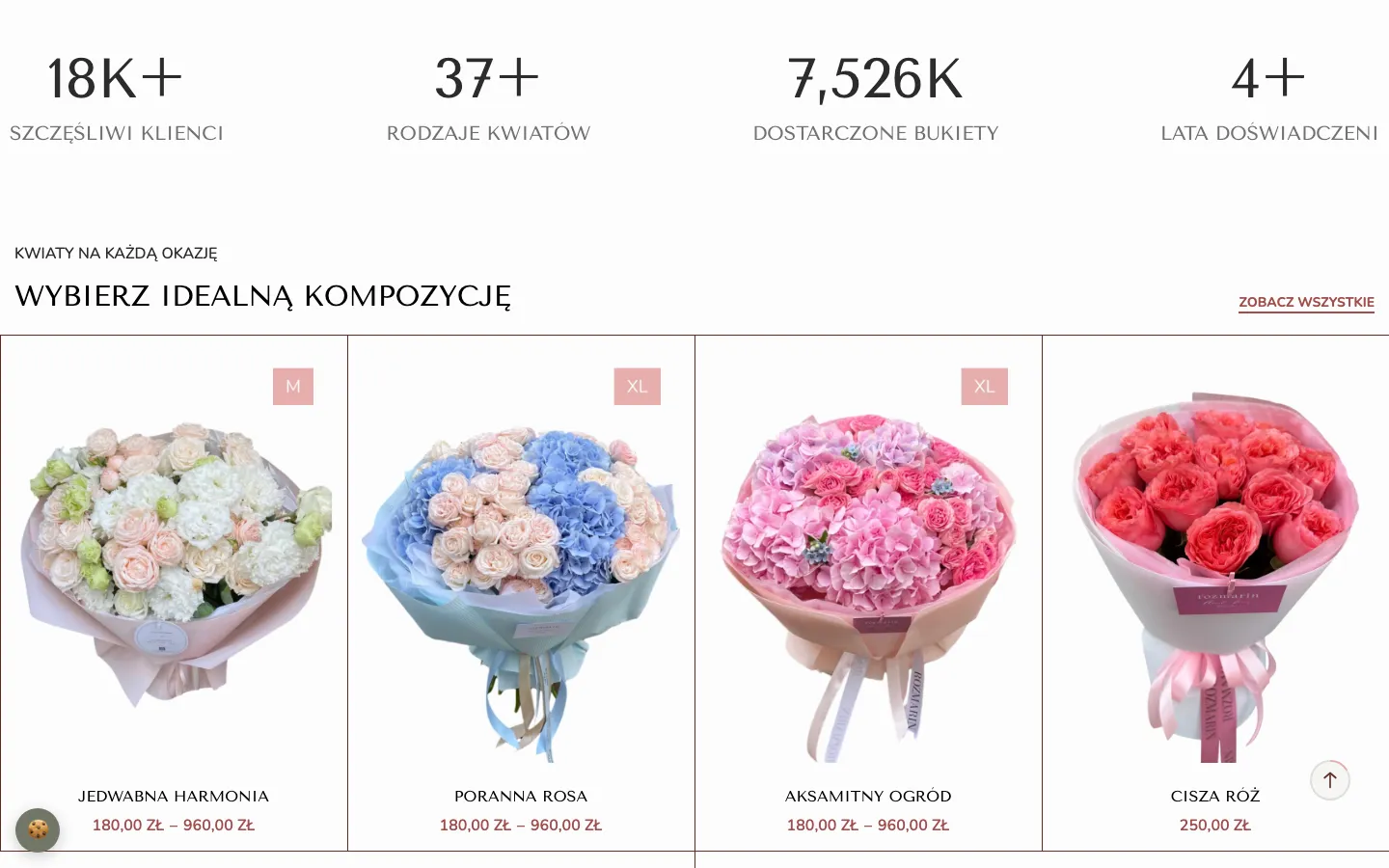
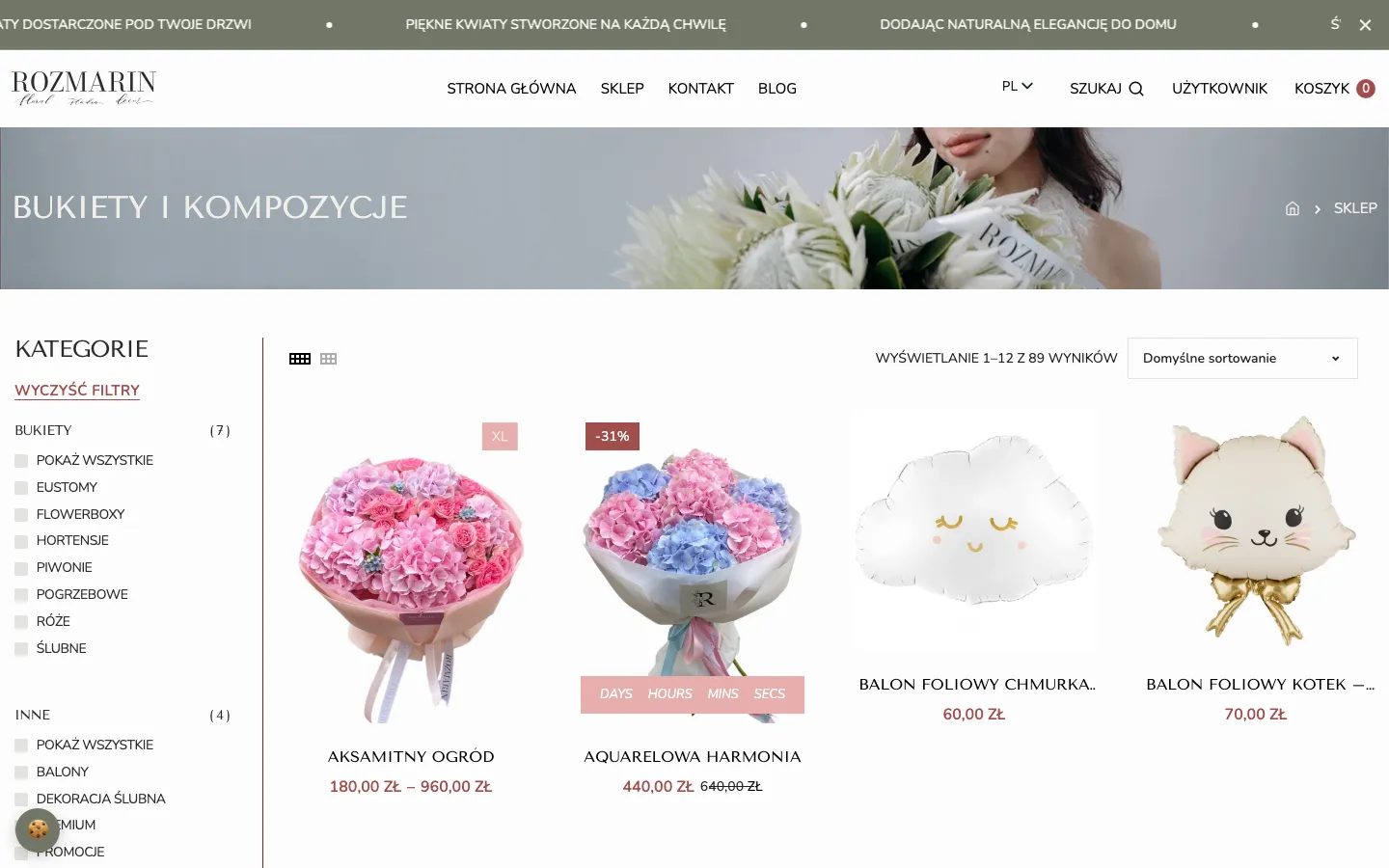
Prices and price filters let the visitor narrow the selection before opening each composition. A price range and a final selected option are different pieces of information. In a comparable store, the customer should be able to understand which choice determines the amount placed in the cart.
What am I buying?
The product image, name and available options should work together. A photograph helps someone compare the composition, while the product information explains the actual offer. This matters especially when a florist presents different sizes or seasonal arrangements under related names.

A store creates responsibilities beyond the product grid

Rozmarin includes a cart, customer accounts, a wishlist, promotions and price filters on WordPress. These are different stages of a shopping journey. A wishlist is a way to save a possible choice; a cart is a selected purchase in progress. Neither is an order until the customer completes the ordering process.

This distinction matters when planning a florist website. A page with good images and a contact button may suit bespoke commissions. A store is appropriate when the business can maintain products, prices and ordering conditions. The project therefore needs an owner for catalogue updates as much as it needs a designer. Stock, delivery slots and warehouse connections are separate requirements to establish for a new shop before choosing its technical scope.

From choosing to maintaining

  1. Find a composition

    The buyer enters through an occasion, product category or search, then uses the product information to refine the choice. The arrangement of categories should reflect the actual assortment rather than a long list of search phrases the florist cannot fulfil.

  2. Check the purchase details

    Before ordering, the customer needs the selected composition, price and relevant delivery information. For a similar project, these details should be agreed with the florist while the catalogue is being prepared, because design cannot decide the business’s delivery area or preparation capacity.

  3. Keep the assortment current

    The owner manages products, prices and promotions in the store panel. When the assortment changes, the public catalogue needs to change with it. A seasonal promotion is useful only while the florist can supply the offer shown on the page.

Three languages need the same commercial meaning

The project was delivered in Polish, English and Ukrainian. The reason to offer a language version is to make the purchase understandable, not simply to translate a welcome message. Product options, category labels and essential ordering information need to stay consistent with the version from which the customer began.

For a similar multilingual shop, we would make a content inventory before estimating the work: which products and variants exist, where images come from, which delivery information the owner supplies and who maintains each language. A newly added product is not fully maintained if only one language explains its options. This is an ongoing editorial responsibility, separate from the initial implementation.

Rozmarin combines a multilingual WordPress storefront with product selection, a cart, customer accounts and promotions. The owner can maintain the catalogue as the offer changes. Occasion-led browsing helps someone begin with the reason for a gift, while the product page provides the detail needed to continue. This relationship between inspiration, selection and ordering is the central design decision: the store has to support all three without making them compete.

A store the florist can run

The delivered WordPress store combines three languages, a catalogue, cart, promotions and delivery information. The florist can maintain the offer in the store administration.

Useful when customers need to select a product and order it, rather than ask for its price in a message. List your products, delivery rules and launch languages when requesting a similar scope.

Prepare a brief for a similar project

What the site does

Project features

  • Sells, not shows

    Every composition has a price, options and a cart; the path from the first screen to the order is short.

  • Three languages

    Polish, English and Ukrainian versions, switched from the header, each its own pages.

  • Promotions without a developer

    Sale prices, featured collections and weekly offers are set in the store admin.

  • Built for a phone

    The bouquet is chosen on a phone, often in a hurry; the layout is built for that first.

“They built our flower shop online: the catalogue, the languages, the ordering. Everything was explained in plain words, and when we needed changes after launch they responded. Now our customers order flowers from the site, not only by phone.”
Rozmarin · Flower shop, Poland · approved by the client

Questions

About Rozmarin

Which platform is the Rozmarin store built on?

WordPress with a full store: cart, wishlist, customer accounts, promotions and price filters. The florist manages products, prices and offers without a developer.

How many languages does the Rozmarin store have?

Three: Polish, English and Ukrainian, each as its own set of pages switched from the header. That matches how flowers are bought in Wrocław.

Why is the Rozmarin catalogue organised by occasion?

Because people buy flowers for a reason, not for a species. Occasions come first; flowers by type sit underneath for those who already know what they want.

Start a similar project.

Tell us what your site has to do. A short call, then a fixed price in writing.